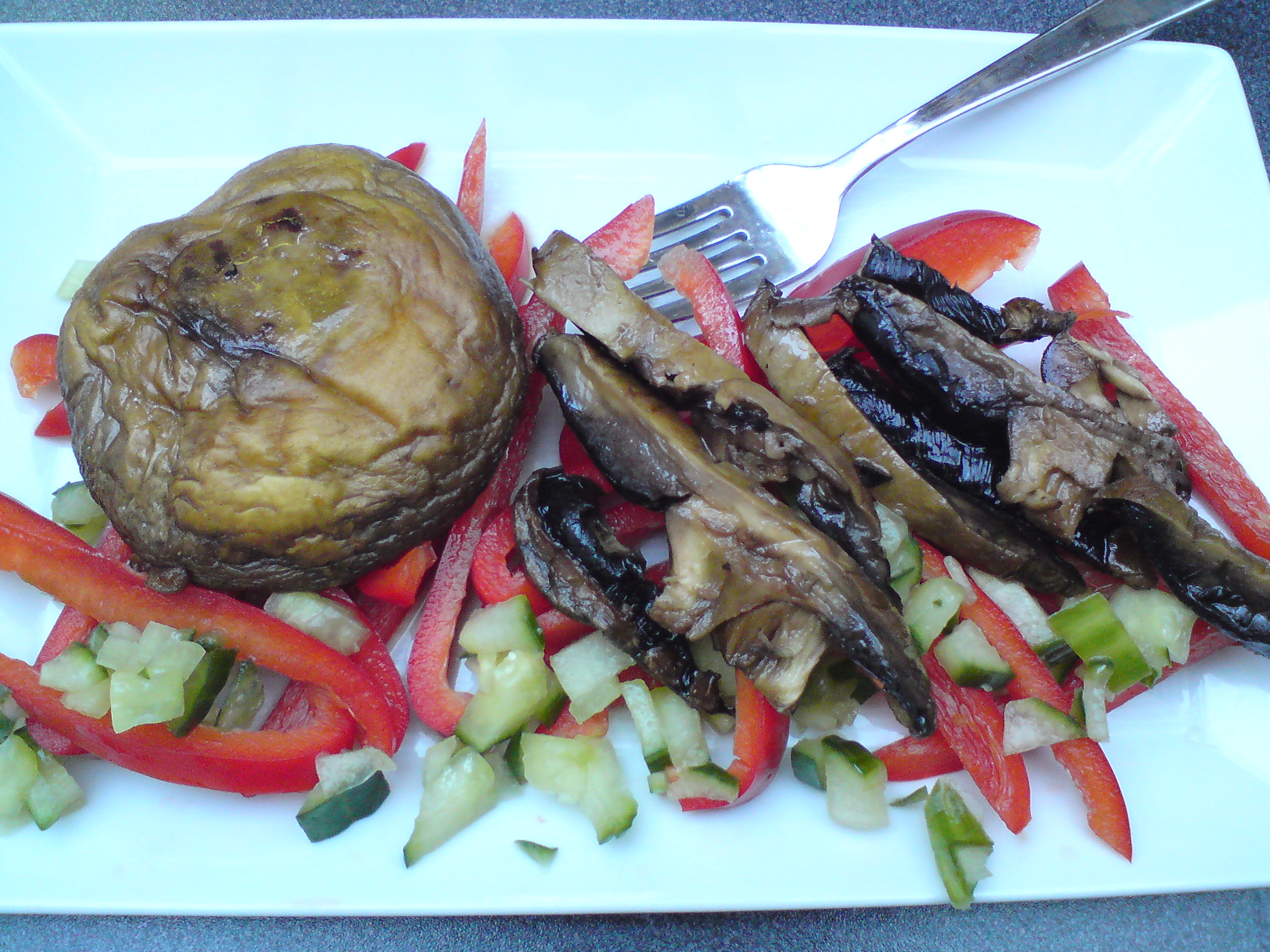
Broiled Portobellos

Here is a quick and easy way to prepare those beautiful and meaty portobello mushrooms. The only part that takes a while is the marinating, but you can get other things done in the kitchen while you do it, including preheating the oven. You won’t believe how good this tastes.

This can also be done on an outdoor grill.

Once cooked, the portobellos can be sliced into long strips for a vegetable side dish, a topping for salads and risotto, or a gourmet addition to a toasted sandwich. You can also put the mushroom caps between two hamburger buns to create a new favorite of mine — portobello burgers.

You can play with the proportions for the marinade, but I favor one part red wine vinegar to two parts olive oil.

4 large portobello mushroom caps
1/2 cup red wine vinegar
1 cup olive oil
1 tsp. sugar
1 tsp. salt
1/2 tsp. garlic powder
1/2 tsp. white pepper

Gently rinse the mushrooms and pat dry with a paper towel. Mix the other ingredients together well in a measuring cup, then pour into a large bowl. Add the mushrooms and leave to marinate for about half an hour, turning every so often to make sure all sides can sit in the liquid.

Preheat the broiler (I set it to 225C/460F degrees). When the broiler is ready, place the caps rounded side up on a baking tray.

Broil for 2-3 minutes, then turn and cook for a further 4-5 minutes. Remove and serve immediately.
Asian Stir-Fry Sauce

The recipe for a good, basic stir-fry sauce has eluded me for a while, but I have finally found one I like. It takes just a couple of minutes to make and has just what I want in a sauce — something that clings to the ingredients and gives it a spicy, salty, and slightly sweet Asian flavor.

This is perfect for those bags of pre-cut stir-fry vegetables you see in the produce aisle of the supermarket. Add bean sprouts, edamame beans, or tofu for a great vegetarian meal, then serve it all on top of rice or rice noodles. It is for me the perfect weekday meal — quick and nutritious, with enough for leftovers (to save time the next day!).

I adapted the recipe from one I found at about.com.

Serves 4

2/3 cup chicken stock
5 Tbsp. dark soy sauce
2 Tbsp. lemon juice
2 tsp. agave syrup (you can substitute honey)
Something for heat — whether minced red chili, a dash of chili sauce, or a sprinkling of cayenne pepper
4 tsp. cornstarch (cornflour) dissolved in 1/2 cup water
4 cloves garlic, minced

Place the first five ingredients in a saucepan over medium-high heat. When it begins to bubble, reduce the heat slightly and add the cornstarch mixture and garlic. Stir until the sauce thickens slightly. Taste and adjust the flavors as needed.

How to use it:
Make the sauce as you cook the rice and before you start cooking the vegetables. When you’re ready, stir-fry the vegetables in a little oil. When the pan becomes dry, add a few spoonfuls of the sauce and stir to coat the vegetables. Keep cooking until the vegetables have softened but still retain some crispness. Add the remaining sauce and mix until everything is coated. Serve immediately over rice.

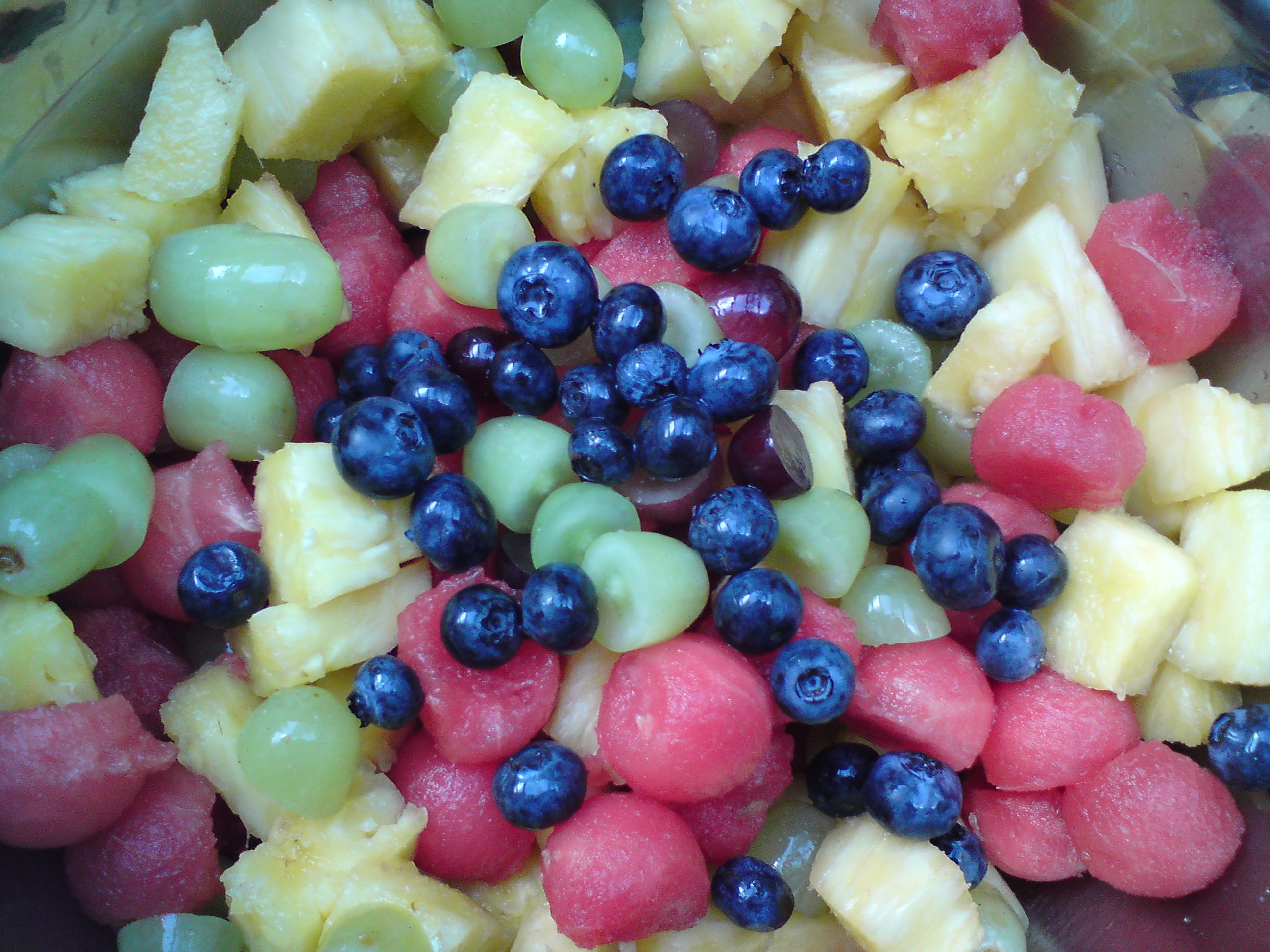
Birthday Fruit Salad

This recipe involved a lot of firsts, starting with the salad itself. I had never made one before. My mom makes an excellent fruit salad that I remember fondly from when I was growing up, and I wasn’t about to try to copy it. So I started with a recipe I already had on hand and adapted it based on what was available and what I wanted in the salad (and how much room we had in the fridge).

I had never cut open a whole watermelon before, nor had I ever cut fresh pineapple. Both were so easy and pleasing that I wondered why on earth I had waited so long to try them.

I served the fruit salad at my birthday party the other week and people really seemed to like it, so I’m guessing it’s good enough to share.

Serves 10

1 small watermelon
1 fresh pineapple
1 bunch of green grapes
1 small bunch of red grapes
100g or less blueberries
Agave syrup (or honey)

Use a melon baller to scoop out balls of watermelon, and place them in a large bowl.

To cut the pineapple, cut off the top and bottom, then stand it upright on a cutting board. Use a chopping knife to cut off the skin in thick strips, starting at the top and going straight down. Continue doing this until all the skin has been taken off, and use a paring knife to cut out any prickly knobs that are left behind. Then, keeping the pineapple upright on the cutting board, use the knife to cut off sections, leaving the core intact (discard the core later). Lay the sections down on the cutting board and cut chunks as desired.

Wash the grapes, cut each in half, and add to the bowl. For color, use more green grapes than red — maybe a ratio of 2 to 1.

Wash the blueberries and toss them in. Again, let color be your guide — add as many or as few as you think the salad needs to look good.

Drizzle agave syrup (or honey, if you don’t have agave) on top, then toss gently with a wooden spoon.

I think the recipe worked because of the nice mix of colors, the strong taste of each of the fruits, and the different shapes — but you could adapt it however you like. You could add cut strawberries for a burst of red, or cut sections of tangerine to add citrus. I avoided using apple or banana just because I wanted strong colors and tastes, but you could use them, too. (If you do use apple, dress the pieces with lemon juice before putting them in the bowl to prevent them from turning brown.) Other berries like blackberries would look spectacular, as would sections of kiwi. You could chop fresh mint and sprinkle it on top. Melons and mangoes don’t interest me so much, but they could also be a nice addition.

Edamame Bean Salad

This is a colorful bean salad with an Asian twist. It’s also easy to double.

Makes 2 servings

1 cup cooked edamame beans
1/2 cup diced cucumber
1/2 cup diced white cabbage
1/2 red bell pepper, diced
1/2 small red onion, diced
1/2 cup bean sprouts, halved if they’re long
1 scallion, chopped
1 tsp. sesame seeds 
2-3 Tbsp. rice vinegar 
2-3 Tbsp. canola oil
Salt and white pepper

Toss the vegetables in a bowl, then add the dressing and season. Chill before serving.

Fennel Seed Bread

I got this recipe from an Estonian food blog (http://nami-nami.blogspot.com/), which in turn got it from a Swedish baker. It’s delicious, and what a nice change to use yeast and such basic ingredients in a recipe again! Mine didn’t rise as high as hoped, but I’ll try to fix that next time. I also used two tablespoons of fennel seed instead of the two teaspoons called for below. I recommend it.

25 grams fresh yeast
1 Tbsp. honey
400 ml tepid water
1 tsp. salt
2 tsp. fennel seeds
4 1/4 cups plain flour

Crumble the yeast into a large bowl, add honey and stir with a wooden spoon until combined. Add tepid water and stir until everything is dissolved.

Add the salt and fennel seeds and most — not all — of the flour. Stir until combined, adding more flour if the dough is too wet. You may need to knead the dough by hand toward the end.

Cover the bowl with a clean towel or clingfilm and let dough rise in a warm, draft-free place about one to two hours, until double in bulk.

Punch down dough. Divide it into two equally sized pieces. Put a little flour in your hands and, on a lightly floured surface, form each dough piece into an oblong loaf.

Line a baking sheet with a parchment paper and lift the dough pieces onto the baking sheet.

Heat the oven to 250C/480F degrees and let the dough rise outside the oven for another 15-20 minutes.

Bake the loaves in the middle of the oven for 15 minutes, then lower the heat to 150C/300F degrees and continue baking for about 20 minutes longer, until the bread is light golden brown and sounds hollow when you tap the bottom.

Let cool on a metal rack, loosely covered with a towel.

Amazing Tapenade

This delicious tapenade is full of good oils and a bit of protein, and is best eaten on crispy wholemeal crackers. It’s great as an appetizer at parties or for a healthy snack anytime.

200g (7 oz.) black olives, pitted* and chopped
55g (2 oz.) capers, chopped
55g (2 oz.) anchovy fillets, chopped
Juice of 1 lemon
2 tsp. olive oil
1 tsp. ground black pepper

Mix everything in a bowl. Do NOT add salt. If the anchovies come packed in olive oil, you may want to reduce the amount that you pour in afterward.

*To pit olives, place them on a chopping board and put the flat side of a large chopping knife on top. Press down quickly and firmly on the knife. You’ll feel the olive break; then you can easily remove the pit.

Melissa’s Granola

I devised this recipe in the past couple of weeks, and I’m enjoying it so much that I wanted to share it. It’s full of protein and fiber and good for those on a low-GI diet — mixed with yogurt, this will keep you full for much longer than more sugary versions.

2 1/2 cups whole rolled oats (not oatmeal)
1 Tbsp. pumpkin seeds
3 Tbsp. sunflower kernels
1/2 cup finely chopped nuts, like almonds or cashews
2 Tbsp. roughly chopped hazelnuts
Heavy sprinkling of cinnamon
Sprinkling of salt
1 1/2 fl. oz. canola (rapeseed) oil
4 1/2 fl. oz. agave syrup*
1 tsp. vanilla extract

Preheat oven to 140C/285F degrees.

Mix together the dry ingredients. In a separate bowl, or in a measuring cup, mix together the oil, agave syrup, and vanilla. Pour the wet mixture into the dry and mix well with a wooden spoon, until everything is coated.

Put mixture in a baking tray with raised edges and bake for one hour, stirring every 15 minutes with a metal spatula or spoon. Let cool, then keep in a sealed container.

*Agave syrup is similar to honey and just as sweet, but doesn’t spike your blood sugar like honey does. You can replace it with honey here, but the recipe won’t have quite the same effects.

Cinnamon Parsnips

This is a great way to serve parsnips — they come out soft and sweet.

Serves 2 as side dish

5 parsnips
50g butter
1 Tbsp. honey
1/2 tsp. ground cinnamon
Salt to taste

Preheat the oven to 180C/355F degrees. Peel and trim the parsnips and cut into chunks of roughly equal size.

Put them in a pot of water and bring to the boil. Let simmer for about 7 minutes. Meanwhile, melt the butter with the honey and cinnamon in a small pot on the stove.

When the parsnips are done boiling, drain them and put them in a baking pan. Pour the butter mixture on top and mix together. Bake for 30 minutes. Sprinkle with salt to taste.

Pesto Risotto with Lemon

Serves 4 as side dish, 2 as main dish

1 Tbsp. olive oil
1 onion, finely chopped
250g arborio risotto rice
Good splash of white wine
850ml hot vegetable stock
Finely grated zest of 1/2 lemon; cut the other half into wedges to serve
4 Tbsp. basil pesto (a good store-bought kind is fine)
40g grated Parmesan, plus extra to serve

Heat the oil in a large pot over medium heat. Add onion and cook, stirring, for 5 minutes.

Add the rice, stir for 1 minute, then pour in the wine and bubble until evaporated. Start adding the stock, about 1/3 cup at a time, stirring constantly until it has boiled away. Repeat until you have used up all the stock and the risotto is creamy and al dente.

Stir in the lemon zest and pesto and cook for 1 minute. Remove from the heat, stir in the grated Parmesan and season to taste.

Serve with a lemon wedge at the side of each plate and parmesan in separate dish on the table.

Other ideas for garnish: a couple of wide, thin parmesan shavings; a sprig of fresh basil; a scattering of pine nuts (these are high in protein, so they’re a good choice if you’re making this a vegetarian meal).

Cheesy Butternut Squash and Pasta Bake

Serves 6

1.6 kilos (about 3.5 lbs) butternut squash
5 Tbsp. olive oil
Salt and pepper
Handful of fresh sage (if using dried, see below)
60g unsalted butter
40g plain flour
350ml vegetable stock
300ml. double cream
50g grated parmesan
275g penne pasta
150g grated gruyere cheese

Have ready an ovenproof dish (about 2.6 liter capacity).

Peel, deseed, and dice the squashes.

Heat 2 Tbsp. oil in a large pan over medium heat. Add half the squash, season, and fry gently for about 15 minutes, turning frequently until golden and tender. If using dried sage, cook it with the squash.

Meanwhile, set the pasta water to boil. Preheat the oven to 190C/400F degrees.

Place cooked squash in a bowl and repeat with the remainder of the squash and another 2 Tbsp. of oil.

When the squash is finished cooking, add the remaining 1 Tbsp. oil to the pan and add the fresh sage, if using. Cook until darkened and crisp, then set aside.

For the sauce, melt the butter in a small nonstick pan. Add the flour and cook together for about a minute, whisking constantly. Remove from the heat and then gradually work in the stock and cream.

Bring back to the boil, stirring, and simmer for about 4 minutes, continuing to whisk until smooth. Remove from the heat, stir in the parmesan, and season to taste.

When the pasta is done, drain it and then transfer to the ovenproof dish. Fold in the sauce, followed by the squash and sage. Scatter the gruyere cheese on top.

Bake for about 20 minutes, or until nicely golden.